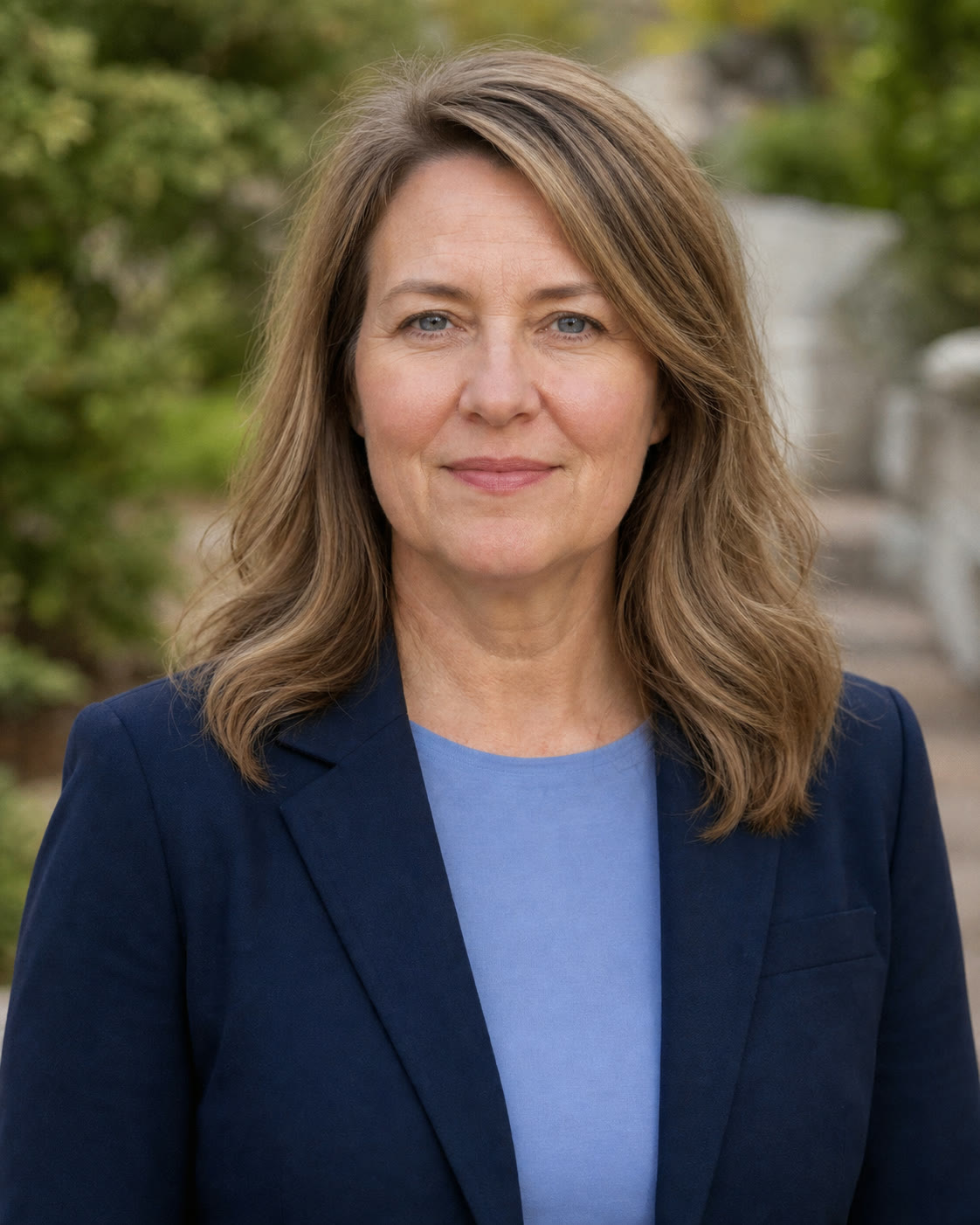
Martha Halenwick has spent most mornings of the last 18 years doing some version of the same thing: listening closely, figuring out what is wrong, and helping a family decide what to do next.
At her veterinary clinic, that might mean caring for a household pet or loading supplies for the limited mobile service she provides to small farms. In county work, it has meant putting residents, business owners, service providers, and local officials around one table before a problem grows more expensive.
Martha is 46, married, and the mother of two children—one in high school and one in community college. She co-owns the clinic and still covers an early shift each week.
The drainage problem that changed her course
Martha did not set out to make county government her profession. Repeated stormwater failures near the clinic flooded neighboring businesses and affected a nearby residential block. Each property owner could describe one piece of the problem, but no one organization could solve it alone.
That experience led Martha into municipal service. She served six years on a municipal council and did not seek another municipal term. She learned how budgets become road work, how a meeting schedule can determine whose voice is heard, and how often a fix stalls when responsibilities stop at a jurisdictional line.
She later served on the county workforce-housing task force and a regional emergency-preparedness working group. Those assignments reinforced a lesson she had already learned on the flooded block: housing, drainage, roads, health, and emergency response are different parts of the same daily life.
Notes from the road
Martha keeps a pocket notebook during mobile veterinary rounds. It holds phone numbers, questions, and small observations that deserve a second look. At public meetings, the notebook usually gives way to an annotated map and color-coded tabs.
That is how Martha works. She listens before drawing a conclusion, but she does not believe collaboration should become an excuse for delay. A partnership needs a limit. A capital project needs a schedule. A public investment needs a result residents can check.
Her family’s annual bird count is one reason she also sees rural land as more than the empty space between developments. She wants compact growth near existing services, voluntary conservation options for landowners, and clear infrastructure commitments when a major project adds new demands.
Why she is running
The District 2 seat on the Cressvale County Commission is open. Martha is running because the county’s hardest problems cross the lines between neighborhoods, municipalities, employers, and service systems.
She believes county government should convene those partners, plan ahead, and make targeted investments where a shared solution is otherwise out of reach. Her standard is simple: name the goal, set a boundary on the public commitment, and publish what happened.
“Cressvale County cannot solve housing, drainage, and emergency response one project at a time. I am running to plan the infrastructure before the crisis, bring employers and community partners to the same table, and make every county investment publish a measurable result.”
Read Martha’s plan or see where she will be listening around District 2.